
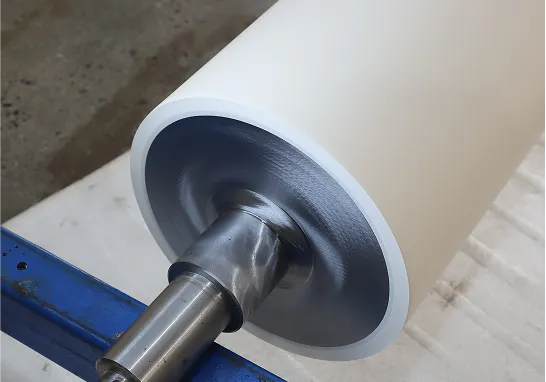
The processing method of rubber rollers mainly includes the following steps:
Choose the appropriate substrate:
The substrate for rubber rollers is usually metal, engineering plastic, or rubber. Choose the appropriate substrate according to the usage scenario and requirements.
Design rubber sleeves:
Design suitable rubber sleeves as needed. The material of the rubber sleeve can be selected from various elastic materials, such as natural rubber, silicone, PU, etc. When designing the rubber sleeve, it is necessary to consider the usage environment and requirements of the rubber roller, such as high temperature resistance, chemical corrosion resistance, etc.
Manufacturing substrate:
Based on the material and design drawings of the substrate, manufacture a substrate that meets the requirements. For metal substrates, machining such as turning, milling, and drilling is required; For engineering plastics, injection molding or extrusion molding processes can be used; For rubber, processes such as rolling or injection can be used.
Processing rubber sleeve:
Process the designed rubber sleeve into a shape and size that meets the requirements. Attention should be paid to maintaining the accuracy and quality of the rubber sleeve during processing.
Adhesive coating treatment:
Place the processed adhesive sleeve on the substrate and bond the sleeve and substrate together with adhesive. For different types of rubber rollers, different gluing processes can be used. For example, centrifugal encapsulation, electrostatic encapsulation, and molded encapsulation can be used.
Surface processing:
Treat the surface after encapsulation to meet the requirements for use. For example, it can be processed by grinding, polishing, etc. to make its surface smooth, flat, and wear-resistant.
Inspection and testing:
Inspect and test the processed rubber rollers to ensure they meet the usage requirements. The testing content includes dimensional accuracy, surface quality, pressure resistance, corrosion resistance, etc. Ultimately, qualified rubber rollers will be assembled into corresponding equipment or devices to meet various transmission, processing, or usage needs during the production process.